
Your brakes are one of the most important safety systems in your vehicle. Whether you’re stopping at a light, avoiding a deer, or easing down a steep hill, every part of your brake system works together to keep you in control.
Not all brakes are built the same. Most modern vehicles use disc brakes on the front wheels and often on the rear as well. Disc brakes include a rotor (disc), caliper, and brake pads. Some vehicles—especially older cars, certain trucks, and many economy models—still use drum brakes on the rear wheels. Drum brakes use a brake drum, brake shoes, and wheel cylinders instead of rotors and calipers. The type of brake system your vehicle has will determine which components are present and how they work together, but both types rely on hydraulic pressure, brake lines, and fluid to function.
Anti-Lock Brake System (ABS)
Modern vehicles use ABS sensors and a control module to prevent wheel lock-up during hard braking.
If ABS light comes on:
The system may be disabled, but standard braking will still work—get it checked soon.
Brake Shoes & Drums
Some vehicles—especially trucks and older models—use drum brakes on the rear wheels.
Brake Shoes:
Curved pieces of friction material that press outward against the drum.
Brake Drums:
Round metal housings that rotate with the wheel.
Main difference from disc brakes:
Shoes push outward; pads clamp inward. Drum systems can last longer but often don’t cool as efficiently.
Wheel Cylinders
Used in drum brake systems, these push the brake shoes outward when fluid pressure builds.
Problem indicators:
Fluid leaks inside the drum or poor braking performance.
Brake Pads
Brake pads are the friction material that press against your rotors to slow your vehicle.
Location:
Inside the brake caliper.
Lifespan:
Usually 25,000–70,000 miles, depending on driving style and conditions.
When to check:
Squealing, grinding, or a longer stopping distance.
Rotors (Brake Discs)
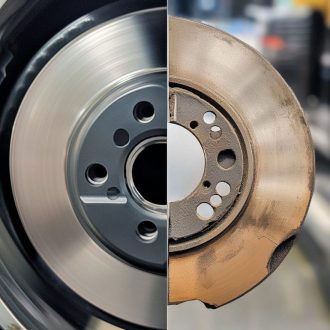
Rotors are the large, round discs your brake pads clamp onto.
Purpose:
Convert your vehicle’s motion into heat through friction.
Common issues:
Warping (causing vibration) and scoring (grooves in the surface).
Maintenance tip:
Always replace or resurface rotors when installing new pads if they’re worn beyond spec.
Calipers
Calipers hold the brake pads and use hydraulic pressure to squeeze them against the rotors.
Types:
Floating (slide on pins) or fixed (bolted in place with pistons on both sides).
Warning signs:
Uneven braking, fluid leaks, or the vehicle pulling to one side.
Brake Lines & Hoses
These carry brake fluid from your master cylinder to each wheel.
Steel lines:
Run along the body of the vehicle.
Rubber hoses:
Flexible sections near the wheels to allow for movement.
Issue to watch for:
Rust, cracks, or leaks—these can cause dangerous brake failure.
Wheel Hubs & Bearings
The hub assembly holds your wheel in place, while the bearings inside allow smooth rotation.
Why it matters:
A failing bearing can cause noise, vibration, and even brake performance issues.
Signs of trouble:
Humming or growling noise that changes with speed.
Master Cylinder
The heart of your brake system. When you press the pedal, the master cylinder pushes brake fluid through the lines to the calipers or wheel cylinders.
Failure signs:
Pedal sinks to the floor, spongy feel, or leaking fluid.
Brake Fluid
Hydraulic fluid transfers force from your foot to the brakes.
Why it’s important:
Old fluid can absorb moisture, leading to corrosion and reduced braking power.
Tip: Most manufacturers recommend a brake fluid flush every 2–3 years.
Parking Brake / Emergency Brake
A mechanical backup that holds your vehicle in place when parked or can stop the vehicle if hydraulic brakes fail.
Types:
Hand lever, foot pedal, or electronic switch.
How it works:
The parking brake is a separate, mechanically controlled system. Instead of using hydraulic fluid, it’s engaged with a cable or electronic actuator that applies braking force to the rear wheels.
Connection to rear brakes:
On some vehicles, the parking brake is integrated into the rear brakes rather than being completely independent. For example:
In drum brake systems, the parking brake often uses the brake shoes to hold the drum in place.
In disc brake systems, some designs include a small set of brake shoes inside the rotor hat or mini drum, while others simply use the rear brake calipers.
Why this matters:
If your rear brakes are worn, out of adjustment, or in poor condition, it can directly affect the parking brake’s ability to hold your vehicle securely. A weak rear brake system = a weak parking brake.
Signs of issues:
Vehicle rolls when the parking brake is set, excessive lever or pedal travel before it engages, or warning lights for electronic parking brakes.
Signs It’s Time for Brake Service
- Squealing, grinding, or clicking noises
- Vibration in the steering wheel or brake pedal
- Longer stopping distances
- Warning lights (ABS or brake system)
- Vehicle pulls to one side while braking
Bottom line:
Every part of your brake system matters. Neglecting even a “small” issue—like worn pads or a leaky line—can lead to bigger, more expensive repairs and serious safety risks.
If you’re hearing noises, feeling vibrations, or just aren’t sure when your brakes were last checked, bring your vehicle to S.P.O.T.S. in Aledo, IL. We’ll inspect your brakes for free and keep you safe on the road.